

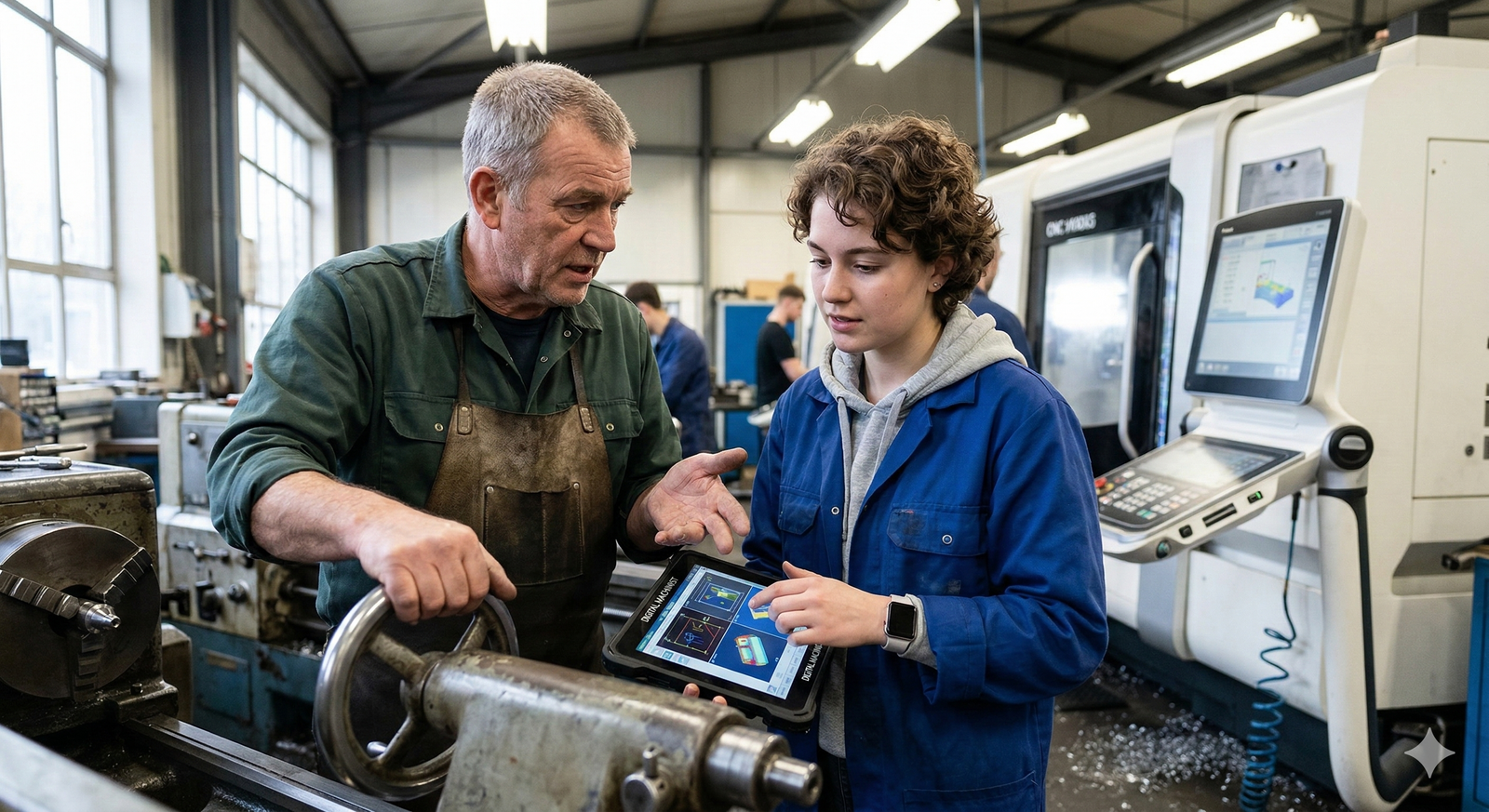

Bridging the Skills Gap Between Veteran Operators and the Next Generation
Across manufacturing shops in the Midwest and around the world, a quiet transition is happening.
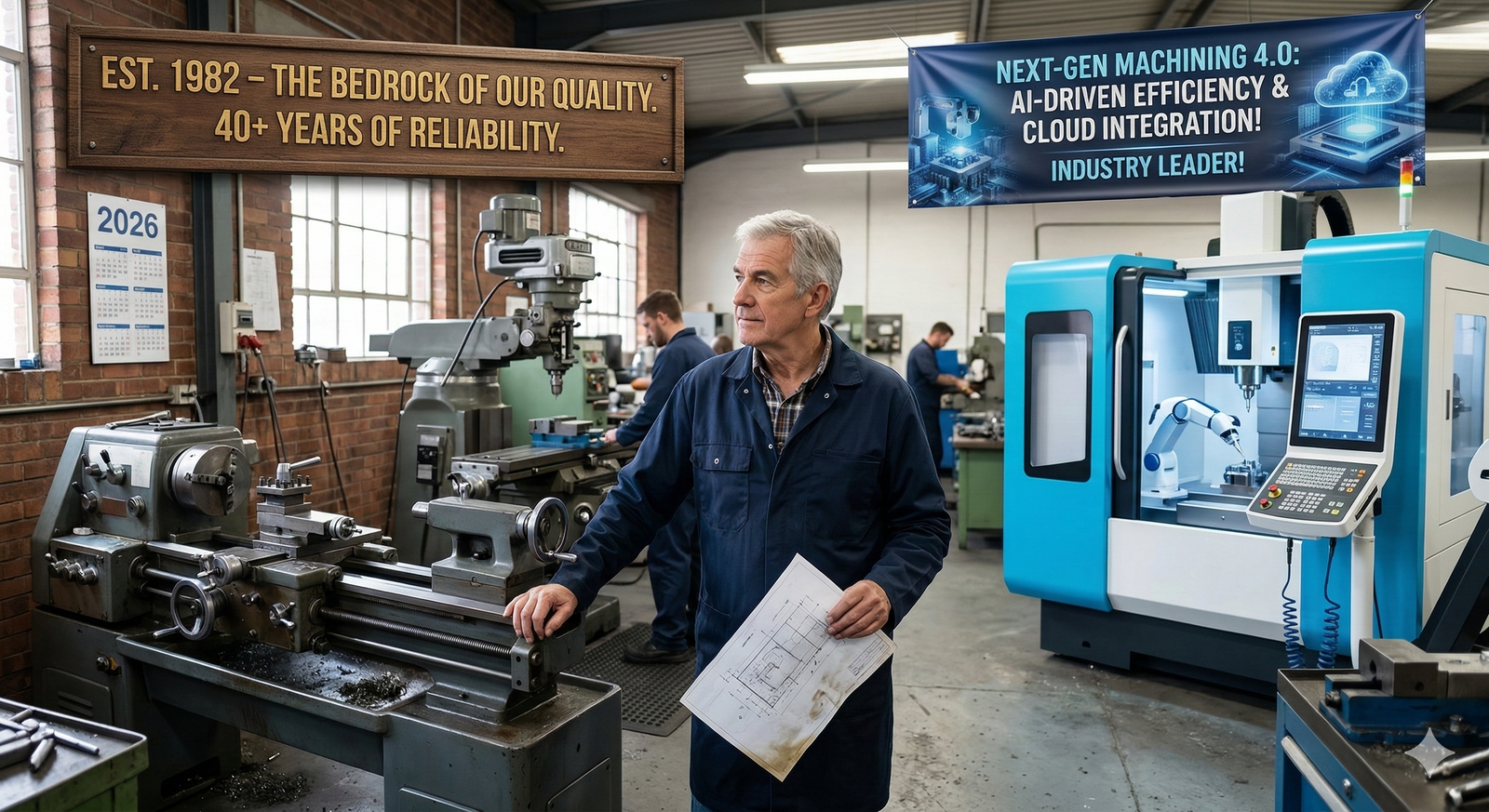
On one side of the shop floor are veteran machinists — craftsmen who learned their trade on manual lathes, knee mills, and surface grinders. They can hear when a tool is cutting correctly. They know feeds and speeds by instinct. They understand machines as physical systems.
On the other side are younger technicians entering manufacturing through CAD, CAM, CNC simulation, and digital automation. They may be extremely capable with software but have had limited exposure to manual machining fundamentals.
This divide is often described as a skills gap.
But the future of manufacturing does not belong to one group or the other.
It belongs to a new professional:
The Digital Machinist.
The Manufacturing Skills Transition
Manufacturing is experiencing a generational shift.
Many experienced machinists who built their careers through the 1980s, 90s, and early 2000s are approaching retirement. At the same time, younger workers are entering the industry through technical schools that emphasize:
-
- CNC programming
- CAD/CAM software
- Automation and robotics
- Digital inspection systems
- Industry 4.0 connectivity
Both groups bring enormous value.
But without a deliberate effort to bridge the two, companies risk losing decades of practical machining knowledge.
What Veteran Machinists Know That Software Cannot Teach
Experienced machinists carry knowledge that is rarely written down.
They understand things such as:
Material Behavior
How steel, aluminum, cast iron, and exotic alloys behave under load and heat.
Tool Feel
Recognizing chatter before it becomes visible.
Setup Judgment
Knowing when a setup will work — and when it will fail.
Machine Behavior
Understanding the limits of rigidity, spindle load, and tool life.
These insights often come from thousands of hours at the machine, not from textbooks.
In many shops, this knowledge exists only in the heads of experienced operators.
What the New Generation Brings
The next generation of machinists brings a completely different skill set.
Younger machinists often excel at:
-
- CAD modeling
- CAM toolpath strategies
- CNC simulation
- Digital inspection
- Process optimization through software
They are comfortable with:
-
- touchscreen interfaces
- automation systems
- data analysis
- digital documentation
In other words, they are native to the digital manufacturing environment.
But many have not yet developed the physical intuition of machining.
The Rise of the Digital Machinist
The most successful shops are not choosing between experience and technology.
They are combining them.
A Digital Machinist is someone who understands both:
Physical machining reality
AND
digital manufacturing tools
This hybrid skillset allows machinists to:
-
- Design smarter setups
- Simulate processes before cutting metal
- Optimize toolpaths
- Reduce scrap and rework
- Improve machine utilization
Instead of replacing traditional machining knowledge, digital tools amplify it.
How Shops Can Bridge the Knowledge Gap
Forward-thinking manufacturers are taking intentional steps to combine the strengths of both generations.
1. Pair Veteran Machinists with Younger Programmers
Some of the most successful shops create mentorship structures where:
-
-
Experienced machinists guide real-world machining decisions
-
Younger machinists handle CAM programming and digital tools
-
This combination often produces better results than either working alone.
2. Document Tribal Knowledge
Many shops operate with decades of undocumented process knowledge.
Companies should capture knowledge such as:
-
-
Proven cutting parameters
-
Workholding strategies
-
Setup procedures
-
Tool selection guidelines
-
Digital documentation ensures this knowledge is not lost when experienced machinists retire.
3. Invest in Training That Combines Both Worlds
Training programs should not focus only on software or only on manual machining.
The most valuable training includes:
-
-
Manual machining fundamentals
-
CNC programming
-
tooling science
-
process planning
-
machine setup strategy
-
The goal is to create machinists who understand why a process works, not just how to program it.
4. Choose Machines That Support Learning
Modern CNC machines are becoming more user-friendly, with features such as:
-
-
conversational programming
-
simulation interfaces
-
digital diagnostics
-
integrated probing systems
-
These features allow machinists to learn faster and make fewer mistakes.
Machines that are intuitive and well documented help new operators gain confidence while experienced machinists can still push the limits when needed.
Why This Matters for the Future of Manufacturing
The global manufacturing workforce is changing rapidly.
The shops that thrive over the next decade will be those that:
-
- preserve practical machining knowledge
- embrace digital manufacturing tools
- build collaborative teams across generations
The Digital Machinist is not a replacement for the traditional machinist.
It is the next evolution of the profession.
Manufacturing Still Needs Craftsmen
Despite automation and advanced CNC systems, machining remains a craft.
Parts still need to be held securely.
Tools still wear.
Materials still behave unpredictably.
Software can simulate a process.
But it cannot replace the judgment of someone who understands the sound, feel, and physics of cutting metal.
That is why the future belongs not to machines alone, but to machinists who understand both the digital and physical worlds.
The Opportunity for the Next Generation
For young professionals considering manufacturing careers, this moment presents a huge opportunity.
A machinist who combines:
-
- hands-on machining skill
- CNC programming
- digital process control
will become one of the most valuable people in any shop.
Manufacturing needs individuals who can think like engineers and work like craftsmen.
That is the Digital Machinist.
Final Thoughts
The gap between veteran machinists and the new generation is often discussed as a problem.
In reality, it is an opportunity.
When experience and technology work together, manufacturers gain:
-
- better processes
- more stable production
- faster problem solving
- stronger teams
The future shop floor will not be defined by manual machines or by automation alone.
It will be built by Digital Machinists who combine both.



Laisser un commentaire