

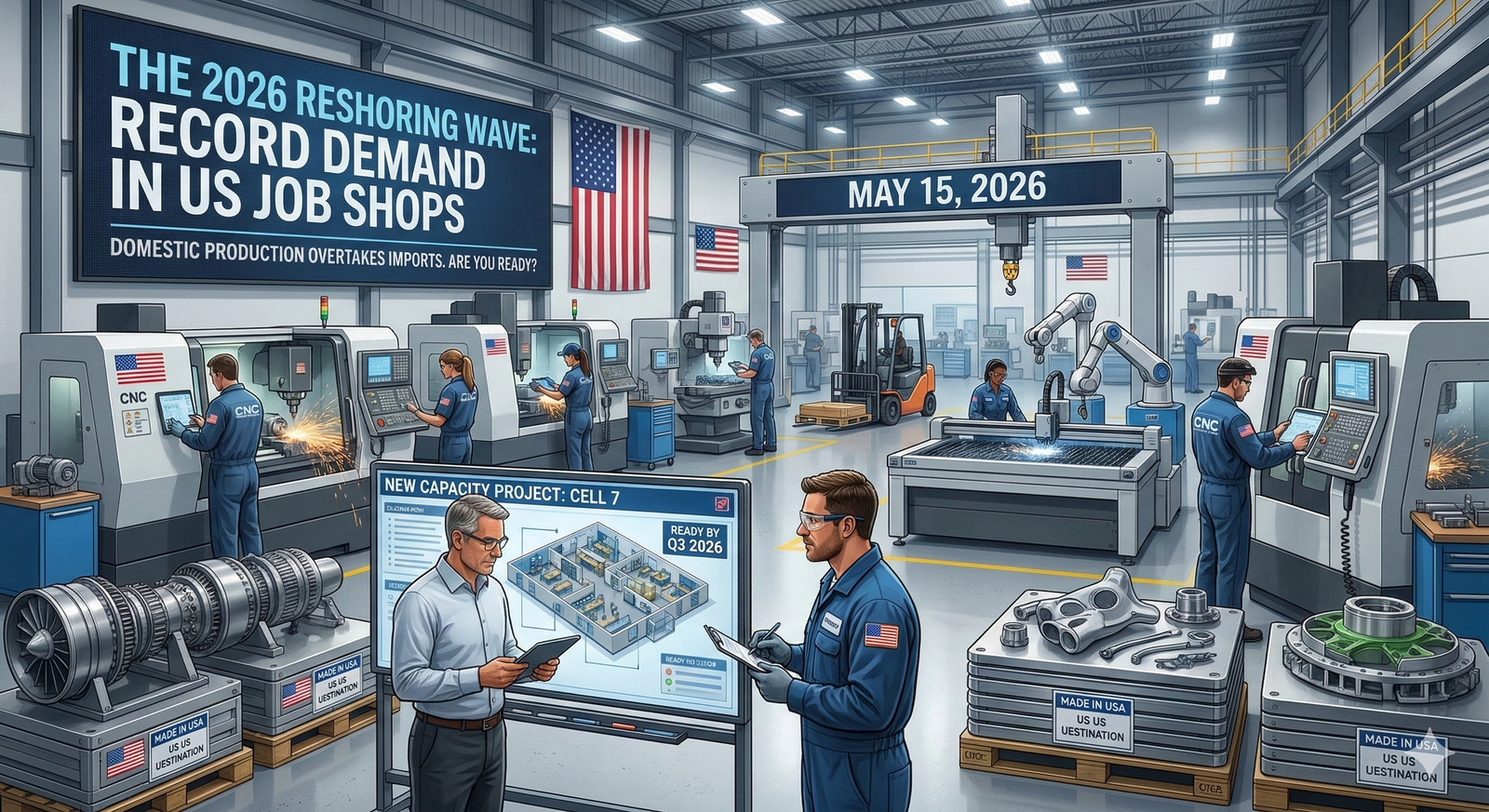

Why U.S. Job Shops Are Seeing Record Demand — and How to Prepare Your Capacity
Across the United States, many machine shops are experiencing something unusual.
After years of steady but unpredictable demand, order books are filling faster than expected. Some job shops report lead times extending months into the future.
What’s driving this surge?
A major factor is the reshoring wave — the movement of manufacturing work back to North America.
For job shops capable of producing precision parts reliably, this shift represents one of the most significant opportunities the industry has seen in decades.
But opportunity also creates pressure.
Shops that cannot increase capacity, maintain quality, and deliver reliably risk losing work just as quickly as they gain it.
Understanding the reshoring trend — and preparing for it — is becoming critical for manufacturers.
Why Manufacturing Is Returning to the U.S.
For many years, global manufacturing followed a simple logic: produce parts where labor costs were lowest.
But recent events have exposed the weaknesses of long and fragile supply chains.
Several factors are now encouraging companies to bring production closer to home.
Supply Chain Risk
Global supply chains have proven vulnerable to disruptions caused by:
-
- geopolitical tensions
- shipping delays
- port congestion
- raw material shortages
Many manufacturers now prioritize supply chain reliability over the lowest possible production cost.
Shorter supply chains reduce uncertainty and improve delivery consistency.
Rising Overseas Costs
Labor cost advantages in many manufacturing regions have narrowed significantly.
At the same time, factors such as:
-
- international freight costs
- tariffs
- inventory carrying costs
have reduced the economic benefit of offshore production.
When these factors are considered together, domestic production often becomes far more competitive.
Demand for Faster Lead Times
Modern manufacturing environments increasingly require rapid product development and flexible production.
Shipping parts halfway around the world often adds weeks or months to production timelines.
By working with domestic suppliers, companies can:
-
- reduce lead times
- respond faster to design changes
- improve collaboration between engineering teams
Why Job Shops Are Benefiting
While reshoring benefits many parts of the manufacturing ecosystem, precision job shops are particularly well positioned to take advantage of the trend.
Job shops offer several advantages.
Flexibility
Unlike high-volume factories, job shops can adapt quickly to new projects and smaller production runs.
This flexibility is essential for companies transitioning production back to North America.
Specialized Expertise
Many reshored projects involve complex or precision components that require experienced machinists and advanced equipment.
Job shops often possess the expertise required to handle these challenging parts.
Shorter Response Times
Domestic job shops can often respond to design changes, engineering questions, or urgent production needs far faster than overseas suppliers.
The Capacity Challenge
While reshoring creates opportunities, it also introduces a major challenge:
capacity constraints.
Many job shops already operate with high machine utilization.
When demand increases suddenly, companies must decide how to expand capacity without compromising quality or delivery performance.
Simply working longer hours is rarely a sustainable solution.
Instead, successful shops focus on strategic capacity improvements.
How Job Shops Can Prepare for the Reshoring Wave
Manufacturers preparing for increased demand often focus on several key areas.
1. Improve Machine Utilization
One of the fastest ways to increase output is to maximize the productivity of existing equipment.
Many shops discover that machines sit idle more often than expected due to:
-
- long setup times
- inefficient scheduling
- poorly optimized machining programs
Improving these factors can significantly increase production without purchasing new machines.
2. Invest in Process Optimization
Process improvements often provide major productivity gains.
This may include:
-
- improved fixturing
- optimized toolpaths
- better tooling selection
- standardized setups
Small improvements applied across multiple jobs can dramatically increase overall shop capacity.
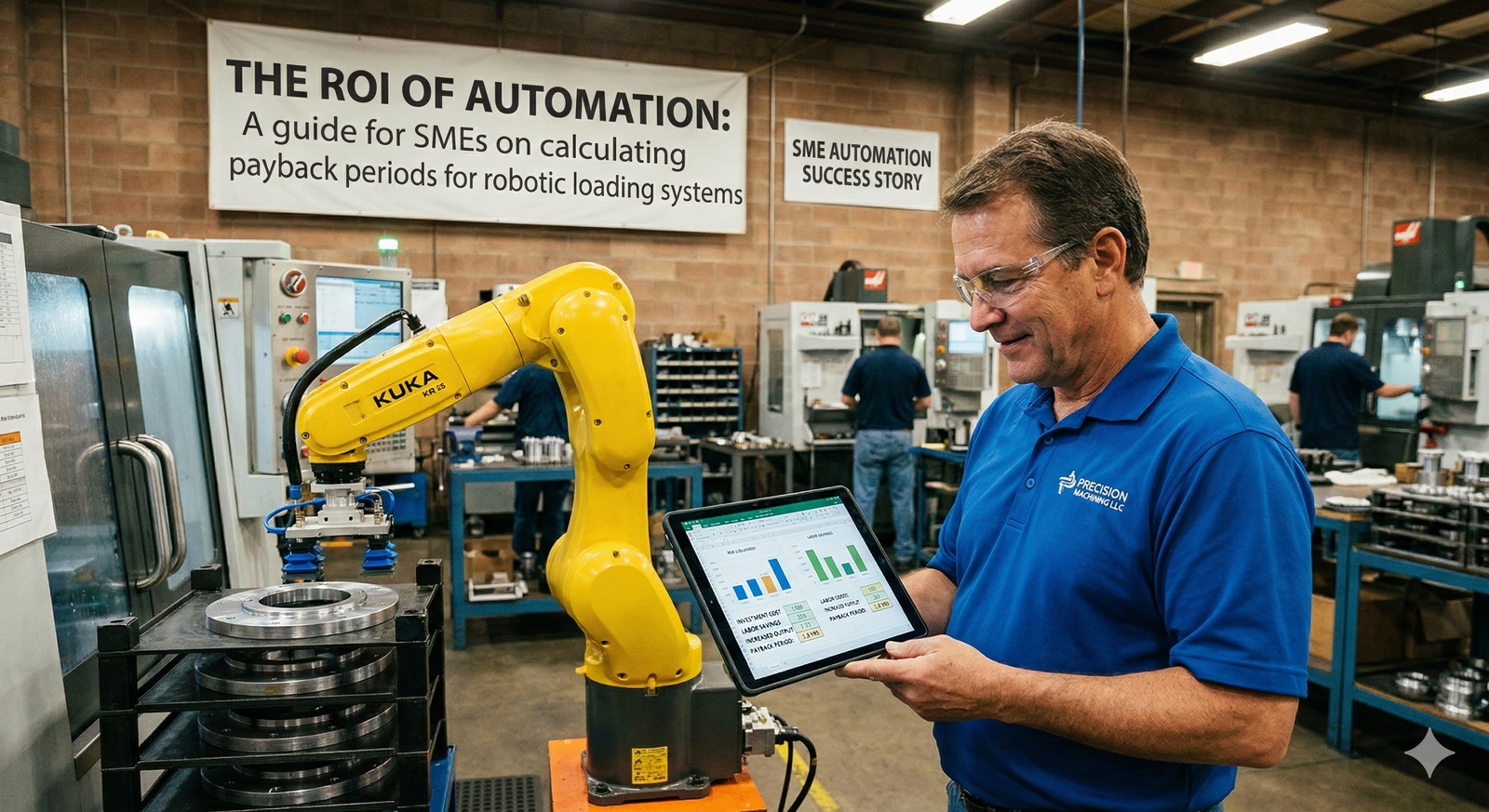
3. Expand Automation Where Practical
Automation is becoming increasingly accessible for job shops.
Examples include:
-
- robotic loading systems
- pallet changers
- bar feeders
- automated tool monitoring
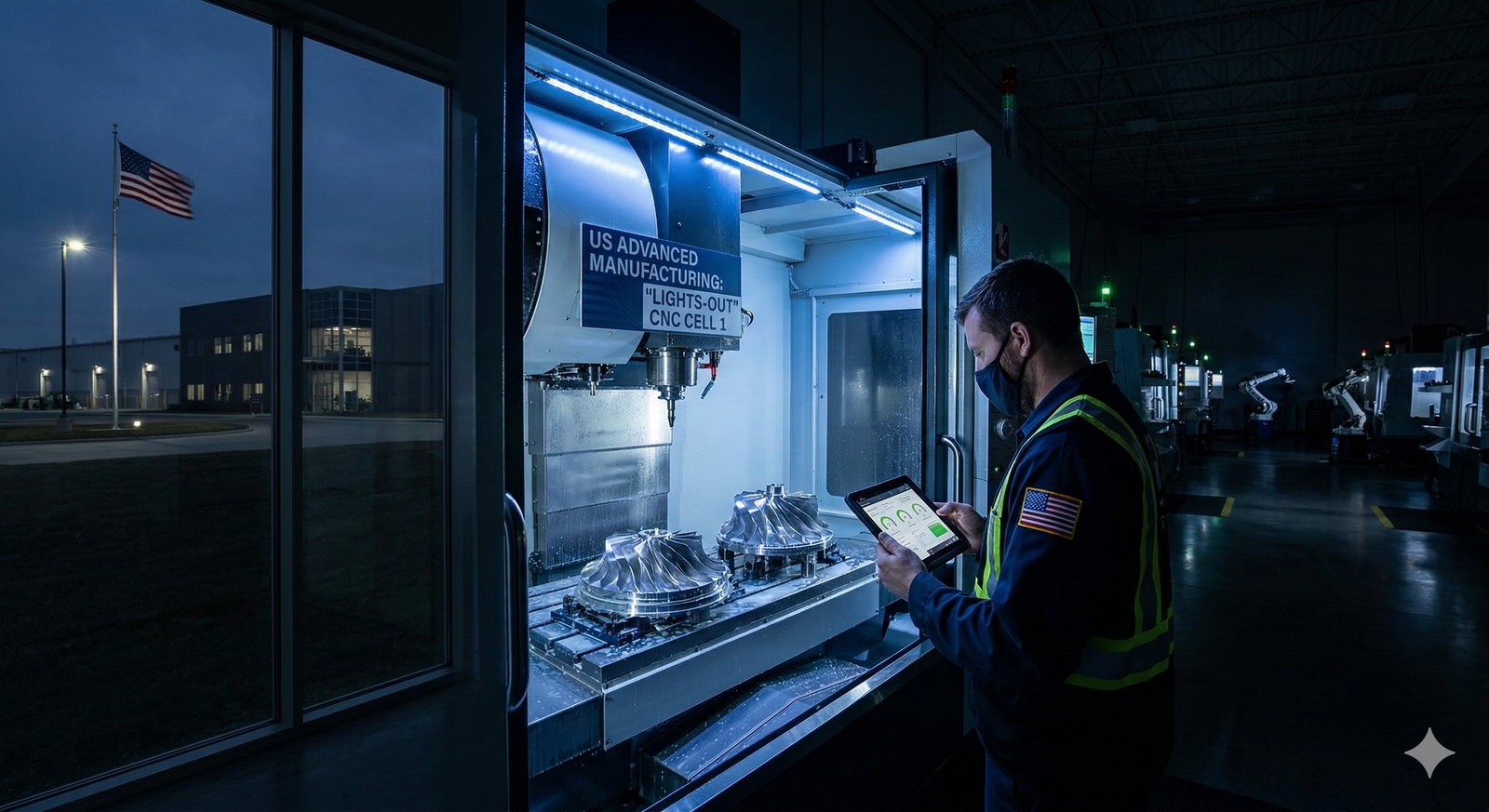
Automation allows machines to continue producing parts during evenings or weekends, increasing effective production hours.
4. Invest in the Right Machines
When demand increases significantly, expanding equipment capacity may become necessary.
The most successful machine investments are those that:
-
- match the shop’s core production work
- provide reliable performance
- support stable machining processes
Machines designed for heavy-duty cutting, consistent accuracy, and long-term reliability often provide the greatest return on investment.
5. Develop Skilled Talent
Even in highly automated shops, skilled machinists remain essential.
Companies preparing for increased demand should invest in:
-
- internal training programs
- apprenticeship systems
- digital machining education
Developing the next generation of machinists ensures that capacity growth is sustainable.
Strategic Growth vs. Reactive Expansion
One common mistake during periods of strong demand is reactive expansion.
Shops may rush to purchase equipment or hire workers without carefully evaluating long-term production needs.
A more effective approach is strategic growth, which involves:
-
- understanding the types of parts the shop produces most efficiently
- investing in machines that support those strengths
- developing processes that maintain consistent quality
This approach ensures that growth strengthens the business rather than creating operational complexity.
Why the Reshoring Trend May Continue
While manufacturing cycles naturally fluctuate, several structural factors suggest that reshoring may remain strong in the coming years.
These include:
-
- national industrial policy initiatives
- increased automation reducing labor cost differences
- rising transportation costs
- demand for supply chain resilience
For many manufacturers, domestic production is no longer just a patriotic idea.
It has become a practical business strategy.
Final Thoughts
The reshoring wave presents a rare opportunity for U.S. job shops.
Companies capable of producing precision components with reliability and efficiency are increasingly in demand.
But success will depend on more than simply accepting new work.
Shops that thrive in this environment will focus on:
-
- improving machine utilization
- optimizing machining processes
- investing in reliable equipment
- developing skilled machinists
Manufacturing growth rarely arrives without challenges.
But for well-prepared job shops, the reshoring wave could represent one of the most significant growth opportunities of the decade.



Leave a comment (all fields required)