

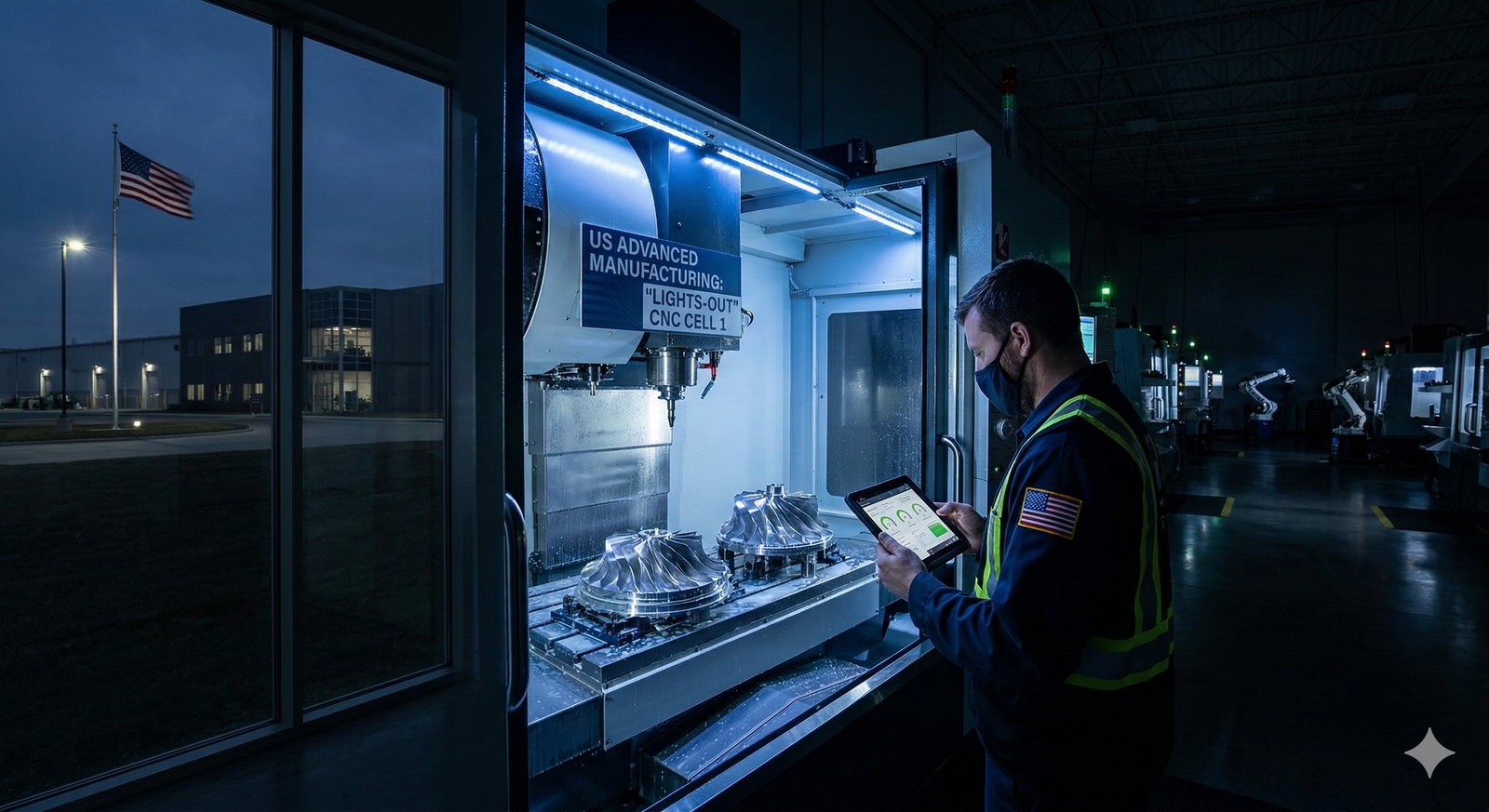

“Lights-Out” Success Stories
How U.S. Machine Shops Are Running 24/7 With Minimal Overnight Supervision
For decades, machine shops operated around a simple rhythm.
Machines ran during the day.
Operators went home at night.
Production stopped until the next morning.
Today, that model is rapidly changing.
Across the United States, more manufacturers are implementing “lights-out” machining — operating CNC machines overnight with little or no human supervision.
Driven by labor shortages, rising costs, and increased production demands, lights-out manufacturing is helping shops dramatically increase machine utilization without adding additional shifts.
But running machines unattended is not as simple as pressing start and going home.
Successful lights-out operations depend on careful planning, stable processes, and reliable equipment.
What “Lights-Out” Manufacturing Actually Means
Lights-out manufacturing refers to production that continues without active operator supervision, often overnight or during weekends.
In these environments:
-
-
machines run pre-programmed operations
-
automated material handling systems load and unload parts
-
monitoring systems track machine performance
-
operators return the next morning to finished parts
-
The goal is simple:
Keep machines producing value even when people are not present.
For many shops, lights-out production transforms a machine from an 8-hour asset into a 24-hour asset.
Why Shops Are Moving Toward Lights-Out Production
Several industry trends are pushing manufacturers toward unattended machining.
Labor Shortages
Many shops struggle to staff second or third shifts.
Lights-out machining allows companies to increase output without hiring additional operators.
Machine Investment Costs
Modern CNC machines are significant capital investments.
Running machines only during daytime hours limits the return on that investment.
Lights-out operations increase machine utilization dramatically.
Demand for Faster Delivery
Customers expect shorter lead times.
Running machines overnight allows manufacturers to increase production capacity without expanding facilities.
Real Examples of Lights-Out Success
While every shop operates differently, many successful lights-out operations share similar characteristics.
Example 1: Precision Job Shop
A small Midwest job shop producing aluminum components implemented a pallet system on its CNC machining centers.
During the day:
-
- operators set up new jobs
- tools are verified
- programs are tested
Overnight:
-
- machines run palletized parts automatically
- completed pallets are indexed into the machine
The shop effectively doubled its output without adding a night shift.
Example 2: Automotive Supplier
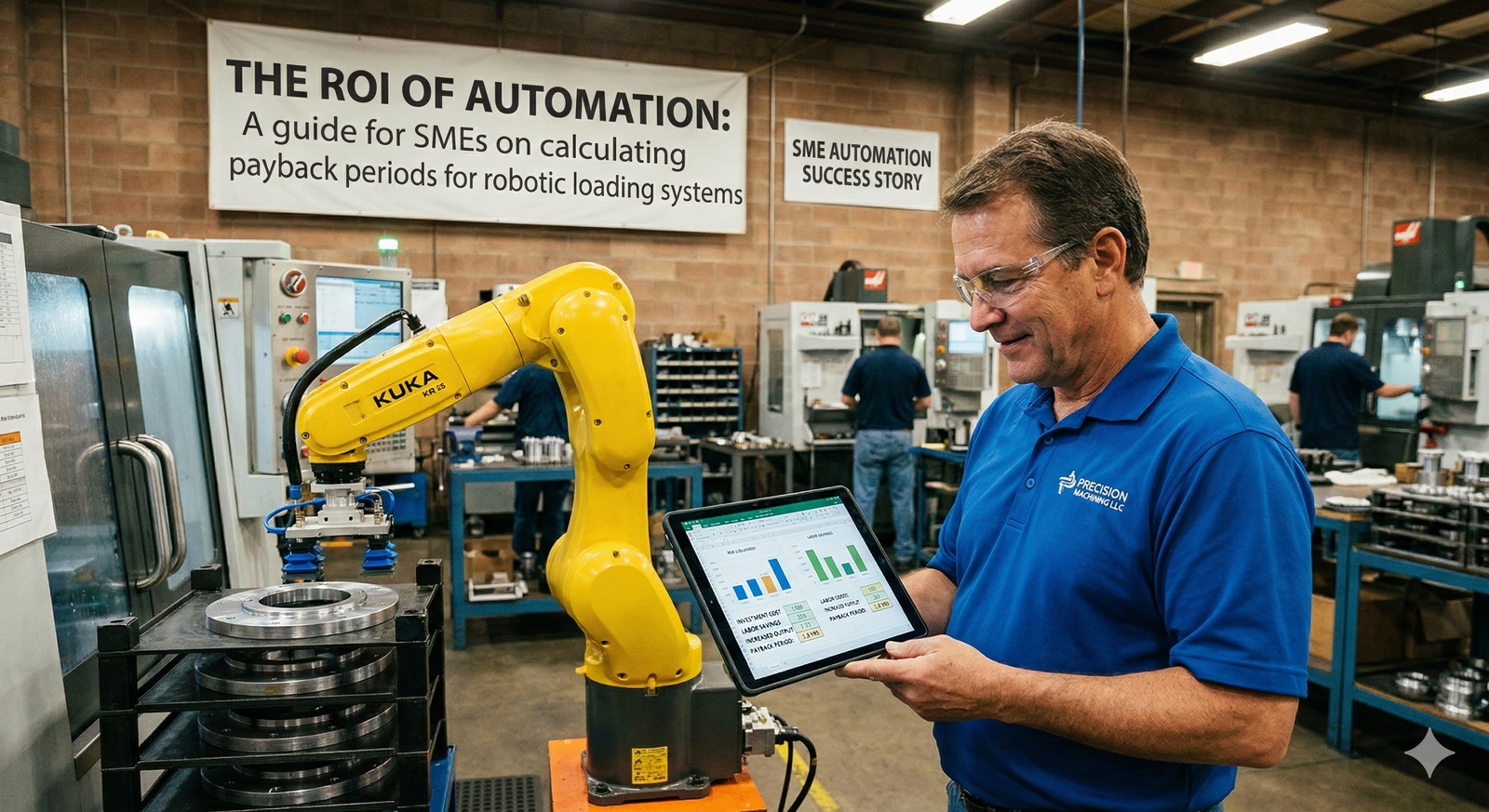
An automotive component supplier integrated robotic loading with CNC lathes.
Robots handle:
-
- raw material loading
- finished part unloading
- part stacking
Operators supervise production during the day while the robotic cells continue producing overnight.
This approach significantly increased production capacity while maintaining consistent quality.
Example 3: Aerospace Component Manufacturer
An aerospace supplier producing high-value parts implemented lights-out machining only after stabilizing their processes.
They focused on:
-
- reliable fixturing
- tool life monitoring
- in-machine probing
Once these systems were proven stable, machines were able to run unattended for extended periods.
What Makes Lights-Out Machining Work
Not every shop is ready for unattended machining.
Successful lights-out operations depend on several critical factors.
1. Stable Machining Processes
Unattended machining requires processes that are predictable and repeatable.
This means:
-
- reliable toolpaths
- consistent material behavior
- stable cutting parameters
If a process frequently requires operator intervention, it is not yet ready for lights-out production.
2. Reliable Tooling
Tool breakage is one of the biggest risks in unattended machining.
Shops often implement:
-
- high-quality cutting tools
- conservative cutting parameters
- tool life monitoring systems
Predictable tool wear is far easier to manage than unexpected failures.
3. Automated Part Handling
Many lights-out systems rely on automation to manage parts.
Common solutions include:
-
- pallet changers
- robotic loading systems
- bar feeders for CNC lathes
- part conveyors
These systems allow machines to continue operating without manual intervention.
4. Machine Monitoring
Modern CNC machines can provide real-time monitoring information such as:
-
- spindle load
- tool wear indicators
- machine alarms
Some shops also use remote monitoring systems that send alerts to operators if issues occur overnight.
5. Thoughtful Job Selection
Not every job is suitable for lights-out machining.
Ideal candidates include:
-
- repeat production parts
- stable materials
- well-proven programs
- parts with predictable tool life
Complex prototype work usually requires operator supervision.
The Role of Machine Design
Machines used for lights-out manufacturing must be designed for reliability.
Important machine characteristics include:
-
- rigid construction
- consistent spindle performance
- reliable chip evacuation
- stable thermal behavior
- dependable control systems
Machines that require frequent adjustments are not well suited for unattended production.
Why Process Discipline Matters
The most successful lights-out shops approach machining with strong process discipline.
They invest time in:
-
- documenting setups
- validating programs
- testing tool life
- optimizing fixturing
Lights-out machining does not eliminate the need for skilled machinists.
Instead, it requires even stronger process control before production begins.
The Human Factor
Even in highly automated shops, people remain essential.
Machinists play critical roles in:
-
- programming
- setup planning
- process improvement
- troubleshooting
Lights-out machining works best when skilled machinists prepare stable processes during the day so machines can run confidently overnight.
The Future of Lights-Out Manufacturing
As automation technology continues to improve, lights-out machining will become increasingly common.
Advances in:
-
- robotics
- machine monitoring
- AI-assisted programming
- predictive maintenance
are making unattended manufacturing more reliable than ever before.
For many manufacturers, the goal is not to eliminate human involvement, but to allow skilled machinists to focus on high-value tasks while machines handle routine production.
Final Thoughts
Lights-out machining represents one of the most powerful ways manufacturers can increase productivity.
By combining reliable equipment, stable processes, and thoughtful automation, shops can extend production well beyond traditional working hours.
The result is simple:
-
- higher machine utilization
- increased output
- improved return on equipment investment
Machines that can produce parts while the lights are off are not just efficient.
They are helping define the future of modern manufacturing.



Leave a comment (all fields required)